Preparing mortgage documents in Trinidad or Tobago? Know what is available and what is outstanding.
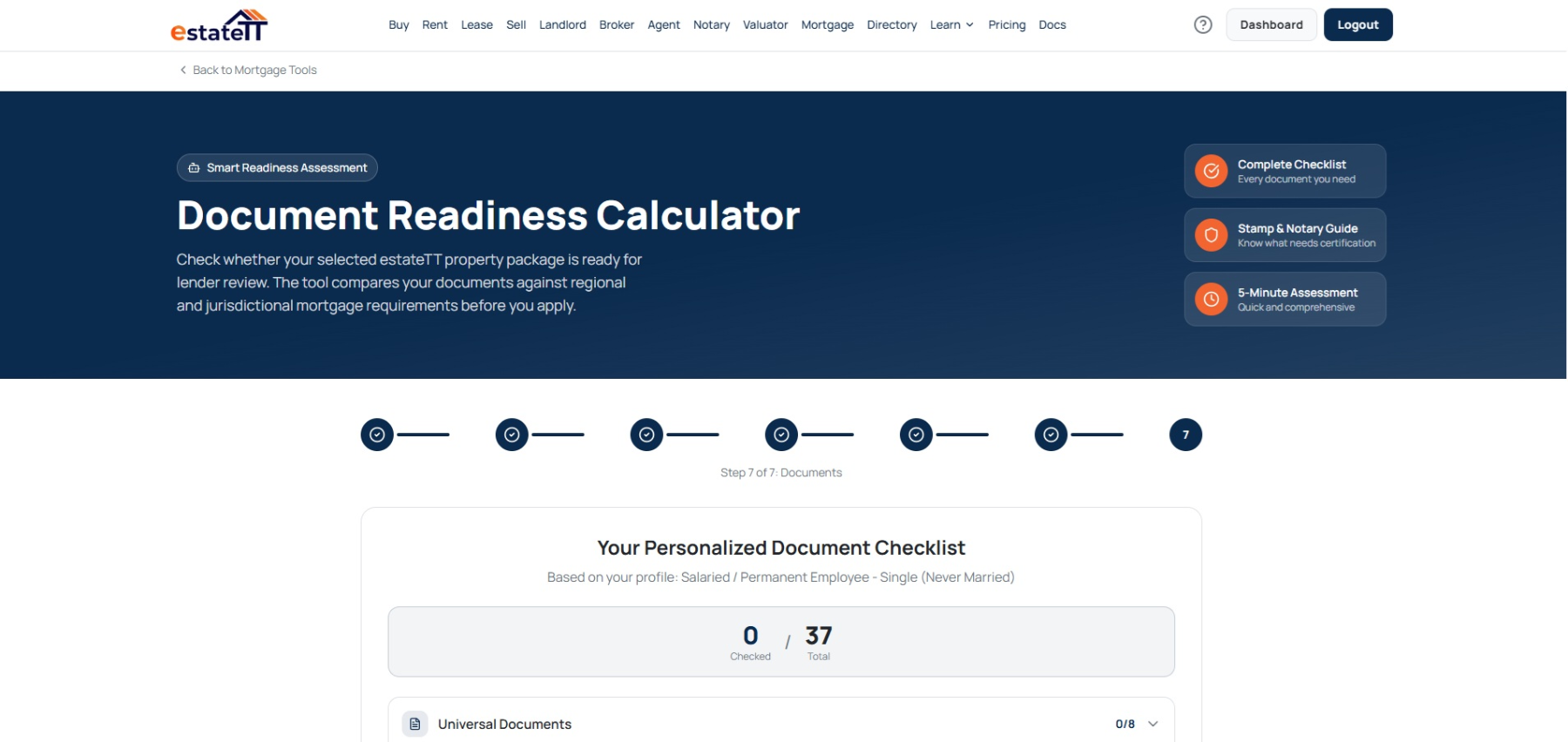
Choose the property, describe your buyer situation, and check what you already have. The estateTT tool builds a personalized document checklist, shows what is missing, and gives the preparation a place to continue when you are ready to save it.
estateTT Document Readiness Assessment
A checklist shaped by the buyer and property
Choose
Link the property
Describe
Add your context
Check
Mark documents ready
Review
See gaps and priorities
Save
Continue in your account
The tool starts with context
Build the checklist around your situation, not a generic article.
The tool changes the checklist according to the property and buyer context you provide. That makes the result more useful than a static list copied from a general mortgage guide.
You can complete the assessment and see the result before creating an account. The account becomes useful when you want to save the assessment, upload documents, manage package progress, or control what a lender can see.
01
Property and jurisdiction
Start from an estateTT listing, its country, and the type of property the package needs to support.
02
Buyer or company context
Residency, employment, relationship status, or company structure changes the questions the assessment asks.
03
Deposit and special circumstances
Select the sources and additional facts that may add supporting items to the checklist.
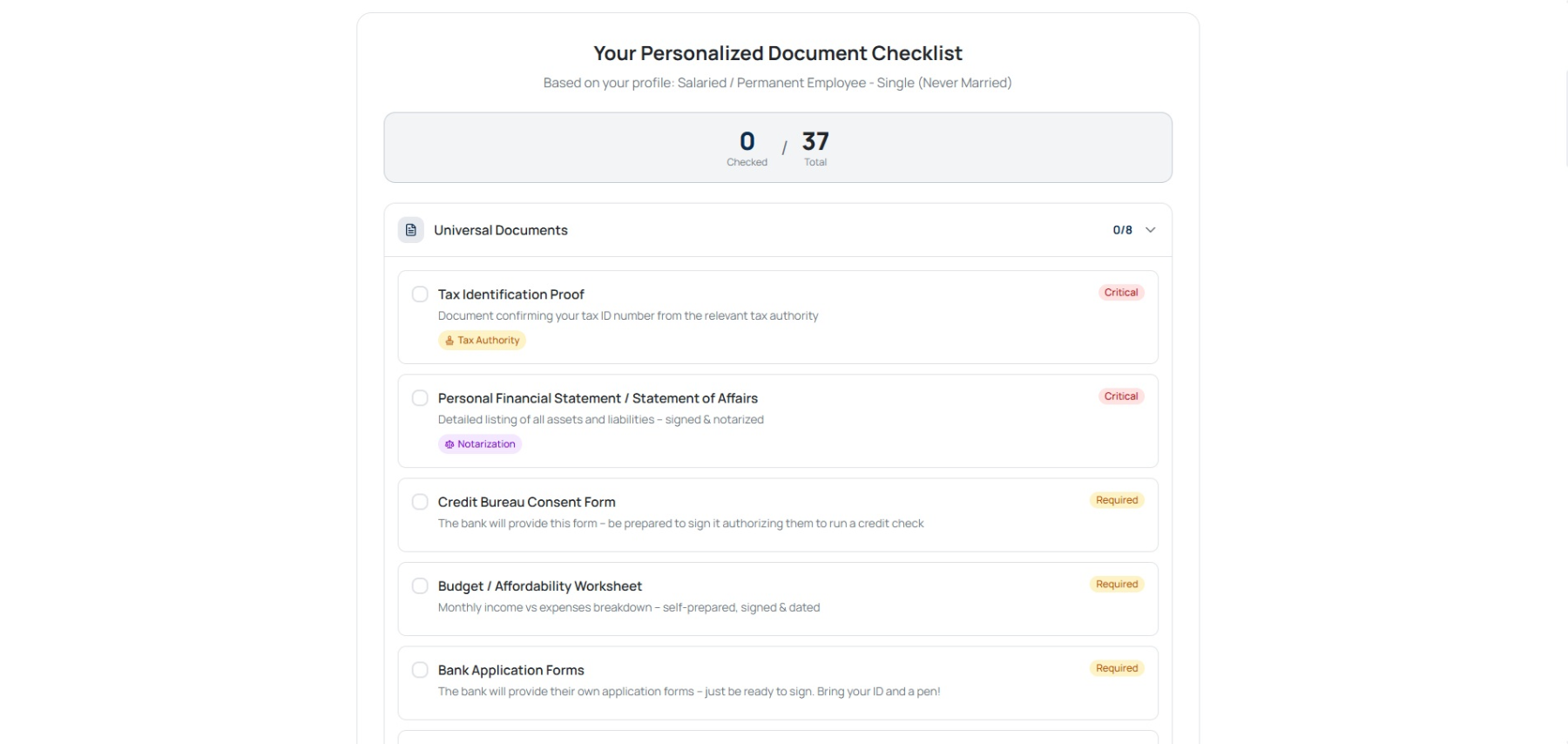
Your personalized document checklist
Review categories and mark what is already available
The result earns the next click
See what is available now, available on request, and still outstanding.
The assessment does not stop at a document list. It turns what you marked into a readiness view that makes the next preparation step easier to choose.
Assessment first. Account when it becomes useful.
The checklist answers today’s question. The buyer account carries tomorrow’s work.
Complete the assessment and see its result without creating an account. If the package is worth keeping, the account turns that one-time result into an ongoing readiness workspace.
Save the assessment
Keep the selected property, buyer context, checklist state, and document availability result instead of starting again.
Build the package
Upload supporting documents and return to the package progress as missing items are resolved.
Control later access
Manage bank visibility, contact access, and document grants through the package consent controls.
Document availability is not approval
Use the tool to prepare the conversation—not to replace the people making professional decisions.
A useful readiness page should make the boundary clearer, not bury it after promising an outcome the platform cannot control.
Lender
Sets its document requirements, assesses affordability and credit, and makes every lending decision.
Attorney and valuator
Handle legal, title, transaction, and professional valuation work within their respective roles.
estateTT
Builds the preparation workflow, records the availability you report, and keeps the package organized under your control.
Inside an eligible saved package
Document Readiness Assistant
The package-scoped agent works from package records and visible document facts. It does not change documents, approve lending, or replace lender and professional review.
A later layer—not the hero promise
Use AI after the package exists and the visible facts have somewhere controlled to live.
The first conversion is the assessment because that is the immediate value. The AI agent belongs later in the account journey, when there is a specific saved package to review.
What stays human
Credit decisions, lender requirements, document acceptance, legal conclusions, valuations, and the choice to grant access.
The next useful route
Keep the mortgage question connected to the property decision.
Use the next route that answers the question now shaping the purchase: monthly payment, available property, or valuation context.
Mortgage Calculator
Estimate a monthly mortgage payment separately from the document-readiness assessment.
Property for Sale
Browse Trinidad and Tobago sale listings and choose the property you want the readiness work to support.
Property Valuation
Prepare the property context for a qualified valuation conversation without treating asking price as a professional opinion.
Questions before you start
Using the Trinidad and Tobago Document Readiness Assessment
Can I use the mortgage readiness assessment without an account?+
Yes. You can complete the assessment and review the checklist and document availability result before creating an account. A buyer account is required to save it, upload files and manage the package.
Does the package coverage mean my mortgage will be approved?+
No. The score reflects the document information marked in the estateTT assessment. It is not a credit decision, pre-approval, lending recommendation, or promise that a lender will accept the package.
What does the assessment use to personalize the checklist?+
The workflow uses the property and jurisdiction, residency or incorporation context, employment or entity structure, relationship status, deposit sources, property type, and additional circumstances you select. Your lender remains responsible for stating its actual requirements.
Can I share the package with a lender?+
A saved readiness package can support bank visibility, contact requests, and document grants through account consent controls. The readiness tool itself does not submit a mortgage application, and you decide what access to grant.
Does estateTT lend money, pull my credit report, or give legal advice?+
No. estateTT provides readiness, organization, and workflow tools. Lending decisions, credit reporting, valuation conclusions, title work, and legal advice remain with the relevant institutions and qualified professionals.
The useful first step is already built
Start with the checklist. Create the account when the work needs to continue.
Run the Trinidad and Tobago readiness assessment, see the gaps, and decide whether the result is worth saving into your buyer workspace.
estateTT is a technology provider that delivers specialized workflow and organization tools for real estate platform participants in Trinidad and Tobago. estateTT is not a real estate agency, brokerage, legal firm, or financial institution. The platform does not make title, lending, landholding-license, fee, deposit, or transaction-outcome decisions. While the platform reserves the right to review participants to maintain network quality, it does not certify professional credentials or replace independent checks. Users are solely responsible for independently verifying all transaction details, licensing, and legal requirements with qualified local professionals and relevant Trinidad and Tobago regulatory authorities before engagement.