The listing is only the opening move
Once a Trinidad property becomes serious, the work shifts into documents, buyer questions, seller records, payment preparation, valuation context, and professional follow-up.
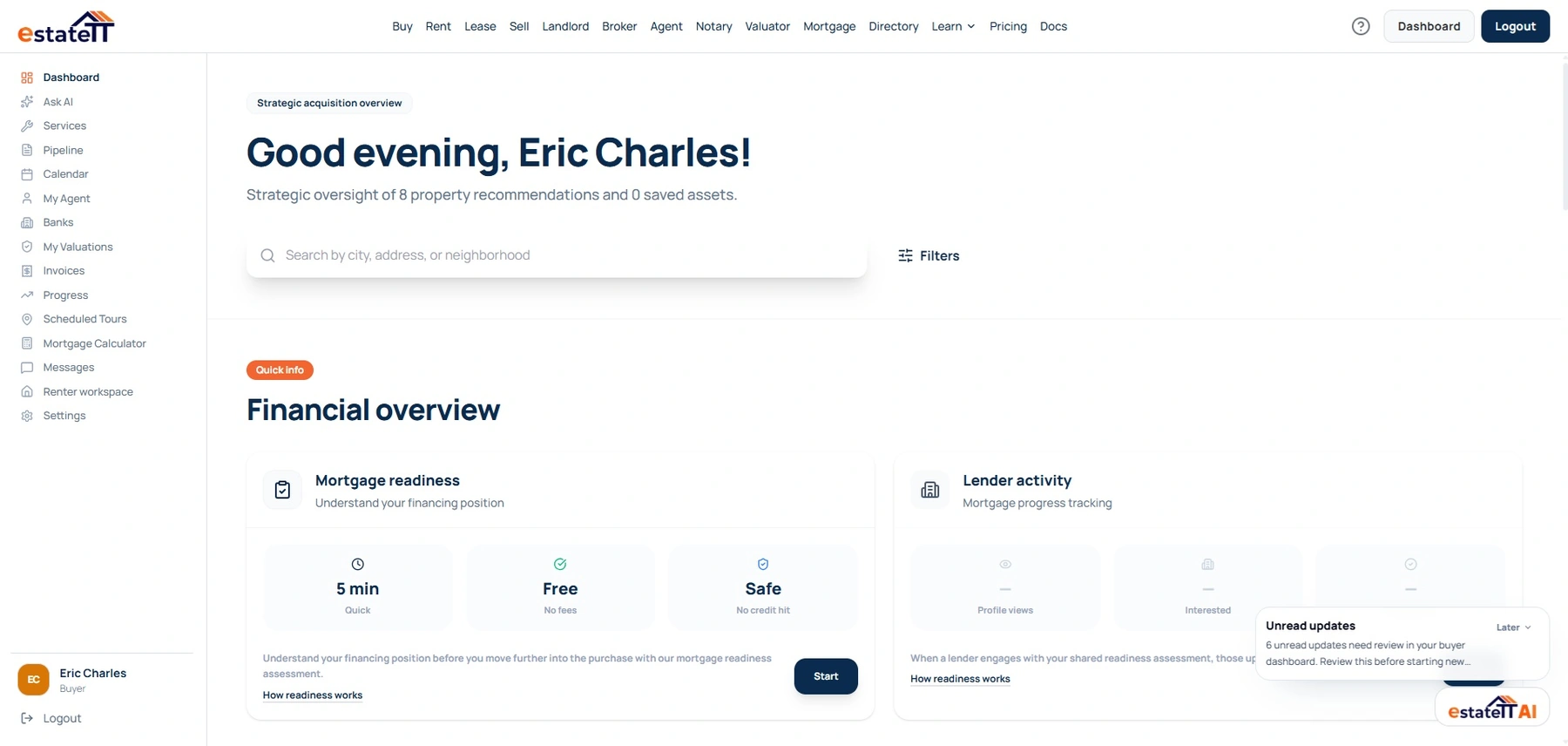
A listing can start the conversation, but the serious work depends on buyer details, seller records, payment preparation, valuation context, messages, and professional requests staying organized around the same property file. estateTT keeps that activity connected before it spreads across inboxes, calls, and separate threads.
Once a Trinidad property becomes serious, the work shifts into documents, buyer questions, seller records, payment preparation, valuation context, and professional follow-up.
Property details, receipts, ownership records, utility-related questions, valuation requests, and attorney follow-up need a place to stay readable before timing pressure builds.
Agents, valuators, attorneys, notaries, lenders, developers, and service providers work better when they receive the property story with the supporting details already organized.
The reality of the market
Buying, renting, selling, valuing, financing, or preparing a property in Trinidad can involve property records, buyer documents, seller details, valuation notes, legal preparation, messages, and professional requests. The listing may look simple. The file behind it usually is not.
estateTT keeps the property record, documents, messages, questions, and handoffs closer to the same file, so each route starts with clearer information instead of another round of searching, forwarding, and repeating.
Where estateTT fits
A Trinidad and Tobago property decision can move from location and price into title questions, valuation needs, lender conversations, legal-support items, and service requests. Your account helps keep those details easier to review together.
A Port of Spain apartment, Chaguanas home, and Tobago villa can each feel right for different reasons. estateTT helps keep saved properties, documents, messages, and open questions easier to compare.
Buyer records, seller documents, valuation needs, payment preparation, and professional requests are easier to manage when the important items are visible before timing starts getting tight.
Agents, valuators, attorneys, lenders, notaries, and service providers can start from clearer property details instead of a loose collection of forwarded messages.
What are you trying to do?
You may be searching, renting, selling, preparing documents, requesting valuation support, finding an agent, or looking for legal-support guidance. Start with the route that helps you make the next decision with more clarity.
Search homes, apartments, land, and commercial property while keeping buyer documents, property questions, payment preparation, valuation notes, and professional follow-up connected to the listing.
Compare rentals while keeping availability, landlord replies, lease questions, documents, messages, and move-in follow-up connected to the rental record.
Prepare your listing, price support, seller records, buyer enquiries, and professional follow-up in one seller workspace, so serious interest is easier to qualify and respond to.
Organize buyer documents, payment estimates, property details, and open questions before a lender or financial professional reviews the request.
Present available units, project details, buyer requirements, and reservation steps clearly, so your team spends more time with prepared purchasers and less time repeating the basics.
Manage buyer leads, seller mandates, listings, client notes, documents, and follow-up in one workspace, so serious enquiries do not get buried across WhatsApp, email, and memory.
Prepare valuation requests with the property purpose, key details, documents, supporting notes, and contact information organized before the valuator reviews the request.
Prepare legal-support and notary requests with property details, party information, document needs, messages, and related context already organized.
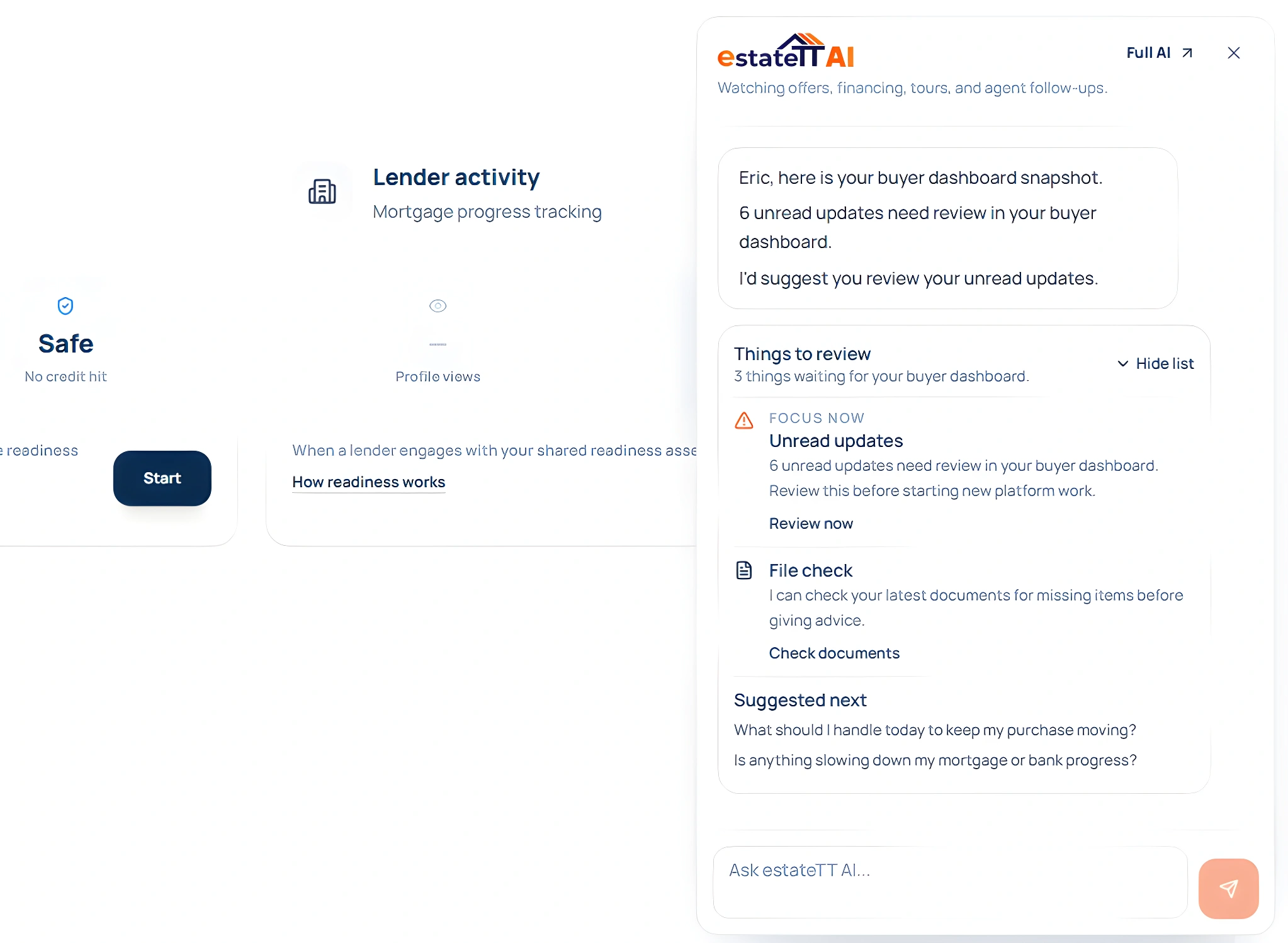
estateTT AI is not a basic chat box beside the page. It can use supported account activity to help you notice missing details, quiet follow-up, open requests, and items that may need attention.
estateTT AI can use supported account activity, including saved properties, messages, uploaded documents, requests, tours, offers, valuations, and unread updates, instead of giving generic property commentary.
The assistant can help you notice unanswered questions, stale follow-up, missing documents, and open requests tied to the property activity already in motion.
estateTT AI does not approve lending, confirm title, issue valuations, draft contracts, collect funds, or replace qualified professionals. It helps you read your account with more clarity.
Built around the people involved
Once a property starts involving agents, lenders, valuators, attorneys, notaries, service providers, buyers, or sellers, estateTT helps users keep the related activity easier to explain from their own account.
Buyers, renters, sellers, landlords, developers, and professionals can keep listing details, messages, documents, and practical questions easier to review as the property conversation moves forward.
Mortgage preparation, valuation needs, legal-support questions, service requests, documents, messages, and open items stay easier to find beside the property that created them.
When the property decision gets more serious, agents, valuators, attorneys, notaries, lenders, and service providers can start with clearer details from the account activity already there.
Role-specific tools
A Port of Spain apartment, Chaguanas home, Tobago villa, commercial space, or land opportunity can each bring a different mix of documents, lender questions, valuation needs, access details, and professional follow-up. estateTT gives buyers, sellers, agents, developers, valuators, notaries, lenders, and service providers their own account tools, so each person can manage the part of the process they are actually responsible for.
A buyer can keep the search, shortlist, offer thinking, lender conversation, and professional support closer to the Trinidad and Tobago properties they are actually considering.
A renter can keep the rental process and later tenancy activity from becoming separate problems when documents, payments, maintenance, and messages all start to matter.
A seller can respond to serious interest with a clearer property position instead of rebuilding the listing, pricing context, documents, and follow-up every time someone asks for more information.
A landlord can manage the property after the listing stage, keeping tenant activity, maintenance, rent, documents, and messages close enough to understand what is happening at each property.
An agent or broker can keep client conversations easier to manage beside the listing that started the enquiry, which helps when several listings, clients, and prospects are moving at the same time.
A developer can give interested purchasers a clearer view of what is available, what still needs to be understood, and what the next step would involve before the sales conversation gets repetitive.
A valuator can manage valuation work from a dedicated dashboard while reviewing clearer property purpose, access details, documents, contact information, and supporting notes.
A notary or legal-support professional can manage requests with more property, party, signing, and document context, while professional judgment stays with the qualified person handling the matter.
A service provider can receive requests with clearer property details and a better sense of why the work is needed, which makes the first conversation more useful.
Professional boundaries
Users and professionals can use estateTT to manage property activity, documents, messages, requests, and questions. Legal, lending, valuation, title, tax, regulatory, construction, certification, conveyancing, and underwriting decisions remain with the qualified people responsible for them.
The workspace and tools for users and professionals to manage listings, searches, tours, offers, documents, messages, valuation activity, service requests, and property questions.
Legal advice, lending decisions, valuation opinions, title conclusions, tax treatment, regulatory obligations, construction decisions, and professional certifications.
Common questions
estateTT helps buyers keep saved properties, documents, questions, messages, valuation notes, and professional follow-up easier to review, so the next conversation does not start from scattered notes.
Yes. Sellers can prepare listing details, price support, seller records, buyer questions, and follow-up in one workspace, so serious interest is easier to qualify and respond to.
Agents and brokers can manage leads, seller mandates, listings, client notes, documents, and follow-up in one workspace instead of tracking serious enquiries across WhatsApp, email, and memory.
estateTT helps buyers organize documents, payment estimates, property details, and outstanding questions before a lender or financial professional reviews the request.
Yes. Valuators using estateTT can receive requests with the property purpose, key details, documents, contact information, and supporting notes already organized, so each valuation enquiry starts with fewer missing basics.
Yes. Legal-support and notary professionals using estateTT can receive requests with property details, party information, document needs, and related files already organized.
No. estateTT provides the workspace and tools for users to manage property activity. Legal advice, lending decisions, valuation opinions, title review, tax treatment, regulatory questions, and closing decisions remain with qualified professionals.
Ready to compare Trinidad and Tobago property with more clarity?
Use estateTT to save properties, review documents, track messages, and keep professional follow-up easier to manage while you decide what deserves a closer look.