Separate interest from practical fit
Keep the client's location priorities, intended use, timing, budget conversation, and non-negotiable concerns beside the listing before more time is committed.
A listing can attract the client before the questions about access, condition, boundaries, utilities, documents, or intended use have been answered. estateTT gives Guyana agents one property-aware workspace for the brief, property conversation, appointments, offers, records, and follow-up that turn interest into informed work.
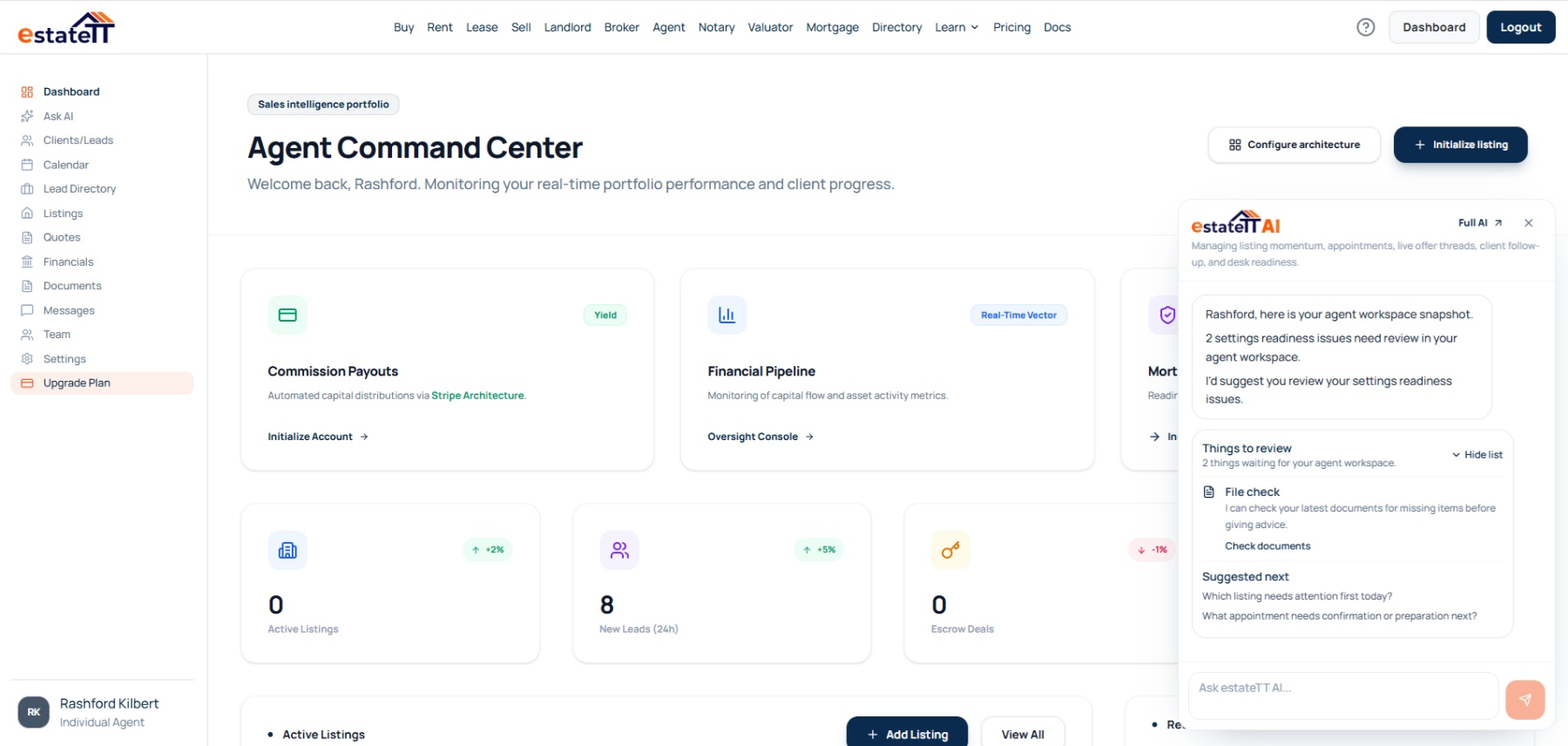
estateTT individual agent account
Guyana listings, practical questions, appointments, offers, and replies
Capture
Record the practical brief
Qualify
Separate interest from fit
Match
Attach questions to listings
Follow up
Trace replies and open items
Move forward
Coordinate the right answer
Start with the practical question
A Guyana client does not need a lecture about the realities around property. They need the agent to remember which practical issue mattered to this search and whether the answer has actually arrived. The agent does not need to personally decide every issue. The valuable work is identifying the concern, attaching it to the right property, finding the person who can answer, and returning to the client with the context intact.
Keep the client's location priorities, intended use, timing, budget conversation, and non-negotiable concerns beside the listing before more time is committed.
Attach access notes, condition concerns, boundary or document questions, utility conversations, seller replies, and viewing observations to the listing they concern.
Use messages, appointments, documents, and professional conversations to show what was clarified, what remains uncertain, and who may need to handle the next conclusion.
Where an unanswered issue loses its place
Clients can accept that an answer requires checking. Confidence weakens when the question is forgotten, the reply cannot be traced to the property, or the next conversation begins without the concern that caused it.
A property may fit the broad search but fail once access, intended use, condition, timing, or another practical requirement becomes specific. Keep those requirements visible while the shortlist changes.
A client message, seller reply, viewing note, and professional request can describe the same concern differently. Without a shared property context, the agent spends time reconstructing which answer is still missing.
Some questions require an attorney, valuator, lender, inspector, surveyor, seller, or another responsible party. Keep the concern and response visible without turning coordination into unsupported advice.
estateTT individual agent account
The Guyana agent workspace keeps listings, clients, appointments, messages, documents, offers, analytics, and financial activity together while practical property questions move between sellers and specialists.
That gives you a place to return when the next useful move depends on a seller reply, property detail, document, appointment outcome, or qualified professional conversation.
Keep the practical concerns shaping the search beside the relevant Guyana listings.
Review viewing activity, seller conversations, and follow-up that may need attention.
Keep each serious Guyana offer discussion and its supporting records beside the property questions that shaped it.
Use supported analytics and financial views to understand which Guyana client files are generating appointments, questions, and serious follow-up.
The Guyana agent journey
The useful path is not pretending every concern has an immediate answer. It is preserving the property question, tracing the reply, and showing the client what has genuinely been clarified.
01
Turn the first enquiry into a client record with the relevant Guyana property interest, intended use, practical concerns, timing, and next action.
02
Clarify what the property must support and which access, condition, document, cost, boundary, utility, or other questions need attention.
03
Connect the brief to relevant listings and keep each open question attached while the shortlist develops.
04
Use appointments, messages, seller replies, and documents to show what was clarified and which concern still needs an answer.
05
Keep the Guyana offer, supporting record, and specialist response connected while the client and each qualified professional retain responsibility for their own conclusion.
Coordination is not the same as confirmation
The workspace helps an agent connect the concern, property, conversation, and response. It cannot verify the underlying issue or replace the client, seller, broker, attorney, valuator, lender, inspector, surveyor, or authority responsible for the conclusion.
Identify the practical concern, keep it attached to the property, and manage the client and seller follow-up within your responsibility.
Clients retain their authority, while qualified professionals and relevant parties handle the checks, advice, representations, and decisions that belong to them.
What the Guyana agent account keeps connected
Keep the practical Guyana client brief beside the listings under discussion
Return to appointments, seller replies, messages, and unanswered questions
Keep offers and documents closer to the property and concern they relate to
Review account activity before updating the client or involving a professional
What the account cannot establish
Confirm title, boundaries, condition, approvals, access, or another party's statements
Make a legal, lending, tax, valuation, inspection, surveying, or regulatory determination
Answer a Guyana property question by committing the client or seller beyond the authority they gave
Use organized Guyana property context as a substitute for broker oversight or a qualified check
Account-aware AI
From supported account activity, estateTT AI can return the Guyana agent to a listing question, client reply, appointment, document, or offer that still needs the right response.
Review supported client, listing, appointment, and message context before deciding which property question or conversation to continue.
Use supported workspace signals to revisit the unanswered Guyana property question, missing record, offer detail, or client reply without depending on memory alone.
The AI can help organize and explain account activity. It does not verify the property, advise the client, or replace legal, lending, valuation, inspection, surveying, or brokerage judgment.
Continue the Guyana property conversation
Move from the individual agent account into live Guyana listings, brokerage support, or the plan information relevant to your practice.
Review the public property inventory your clients may already be exploring.
Use the broker route when Guyana property questions and client follow-up require team assignment, linked agents, or brokerage oversight.
Review the professional plans before opening the Guyana agent account that fits your practice.
Questions about starting the Guyana workspace
This page leads to the individual_agent account. Broker owners and teams should use the broker route so the account structure matches how their Guyana practice operates.
Use the individual workspace for Guyana listings, client records, appointments, messages, documents, offers, analytics, financial views, and account settings.
Yes. Keep the concern, relevant property context, messages, documents, and follow-up visible while the seller or appropriate qualified professional handles the answer or conclusion that belongs to them.
No. Start with the Guyana listings where client questions, seller replies, property records, and professional follow-up are currently hardest to keep connected.
No. estateTT preserves the Guyana file and its open questions; agents, clients, brokers, attorneys, valuators, lenders, inspectors, surveyors, and other qualified professionals remain accountable for their own work and decisions.
The client can wait for a responsible answer. The question should not disappear.
Create your individual agent account and keep the client, listing, appointment, message, document, offer, and open concern ready for follow-up.
estateTT is a technology provider that delivers specialized workflow and organization tools for real estate platform participants in Guyana. estateTT is not a real estate agency, brokerage, legal firm, or financial institution. The platform does not make title, lending, landholding-license, fee, deposit, or transaction-outcome decisions. While the platform reserves the right to review participants to maintain network quality, it does not certify professional credentials or replace independent checks. Users are solely responsible for independently verifying all transaction details, licensing, and legal requirements with qualified local professionals and relevant Guyana regulatory authorities before engagement.