Turn a need into a defined request
Let the client identify the service, people involved, timing, property context, and available documents before your practice commits time.
Give Guyanese property clients a clear route into your services, qualify each opportunity before it reaches the calendar, and manage accepted matters through quote, appointment, documents, session activity, and payment review in one account.
estateTT notary account
Requests, quotes, appointments, documents, and sessions
Join
Choose the right account
Set services
Define what you provide
Review requests
Decide what fits
Quote and schedule
Protect your calendar
Manage matters
Keep accepted work connected
The professional opportunity
A prospective client may know that a notary is needed without knowing how to frame the request. The account creates a path from that uncertain approach to a matter your practice can evaluate.
Let the client identify the service, people involved, timing, property context, and available documents before your practice commits time.
Review the request and supporting context, ask what is missing, and decide whether to quote, clarify further, or decline.
Carry the client, quote, appointment, documents, communication, session status, and payment review forward together.
Notary CRM and practice management
The Guyana notary account gives the practice more than a public presence. It connects the opportunity, the client relationship, and the operating work that follows acceptance.
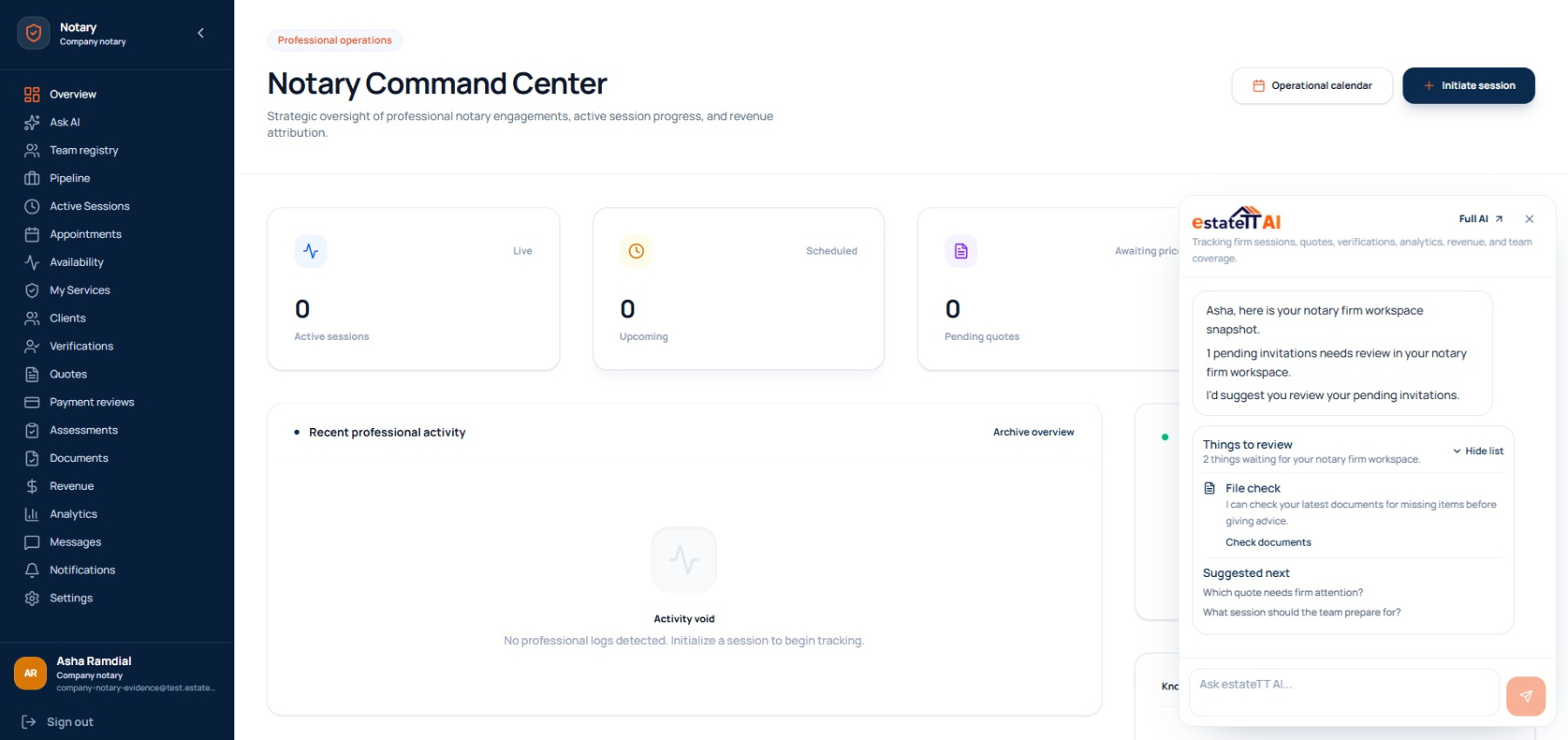
Manage leads, services, clients, availability, quotes, appointments, documents, verification activity, sessions, messages, payment reviews, revenue, and analytics from one working environment.
Independent notaries can begin through the public signup route. Practices requiring shared access can compare permission-aware firm plans before subscribing.
Explain what the practice provides and give suitable clients a clear route to approach.
Assess each request before deciding whether it belongs in the quote pipeline or on the calendar.
Keep the quote, appointment, documents, messages, session activity, and payment review with the client record.
Review supported revenue, analytics, notifications, and firm controls alongside active work.
Where a new request becomes operational pressure
More enquiries do not automatically create a stronger practice. The advantage disappears when requests, prices, appointments, documents, and payment follow-up scatter across unrelated channels.
Basic service, participant, timing, and document questions consume professional time before the practice knows whether the request fits.
The price, client response, availability, and appointment details live in different conversations, leaving viable opportunities without a clear owner.
Without a connected view of requests, matters, payments, and revenue, busy activity can hide stalled work and weak follow-through.
The subscribed-notary path
01
Create the subscribed Guyana notary account and establish the practice presence clients can encounter.
02
Define the services, request expectations, and availability that help suitable clients approach properly.
03
Assess the supplied context, clarify what is missing, and decide whether to quote or decline.
04
Turn suitable opportunities into service quotes and appointments while retaining the client response.
05
Coordinate documents, participants, communication, session activity, completion, and payment review around accepted work.
Account-aware AI
estateTT AI can surface supported account activity across requests, quotes, documents, verification activity, sessions, revenue, settings, and updates. It supports attention and follow-up while leaving every professional decision with the notary.
Bring supported request, quote, session, document, and follow-up activity into view when the practice may need to respond.
Review relevant account context before contacting the client instead of rebuilding the position from memory.
The AI layer does not interpret law, certify documents, conduct title work, set fees, establish authority, or decide whether to act.
A useful partnership keeps the boundary clear
Why subscribe
Guyana’s statutory framework treats appointment and competency as matters for the relevant public authorities. Your estateTT subscription serves a different commercial purpose: helping an authorised practice attract, assess, convert, and manage property-related opportunities.
Let property clients move from discovering the practice to submitting a request you can assess.
Keep clarification, quote, client response, appointment, documents, and session activity on one path.
Connect active work with payment reviews, revenue, notifications, and supported analytics.
Choose with context
Property clients often encounter the need for professional support while buying, selling, financing, or organizing transaction documents. These routes place the notary account inside that wider platform journey.
Review the broader estateTT proposition for notaries and the professional account behind it.
Compare the independent subscription with firm options for shared access and oversight.
See the buyer journey where property preparation and document questions can develop into a professional request.
Questions
It connects discovery with leads, services, clients, availability, quotes, appointments, documents, sessions, messages, payment reviews, revenue, and analytics in a working practice account.
No. Appointment and competency remain governed by Guyana’s legal framework and the responsible authorities. An account is a commercial and operational tool, not evidence of professional authority.
No. The account creates a route into estateTT and tools for converting suitable opportunities. Enquiries, client decisions, accepted work, fees, and revenue cannot be guaranteed.
Yes. You decide whether a request fits the services, availability, fees, professional obligations, and circumstances of the proposed work.
The public route begins with an independent notary account. Practices needing permission-aware team access and oversight can compare the available firm plans.
Create the independent account to present your services, assess requests, quote, schedule, and manage accepted matters. Compare firm plans if the practice needs shared access.
An estateTT subscription provides professional-presence and practice-management tools. It does not appoint a notary public, issue the certificate of competency required by Guyana’s legal framework, certify documents, provide legal advice, conduct title work, hold client funds, or replace the notary’s professional responsibilities.